
Inside Mount Straight Rod with Nautilus Brackets
Configure an inside-mount rod with your finish, round or square bases, rings and optional wands.
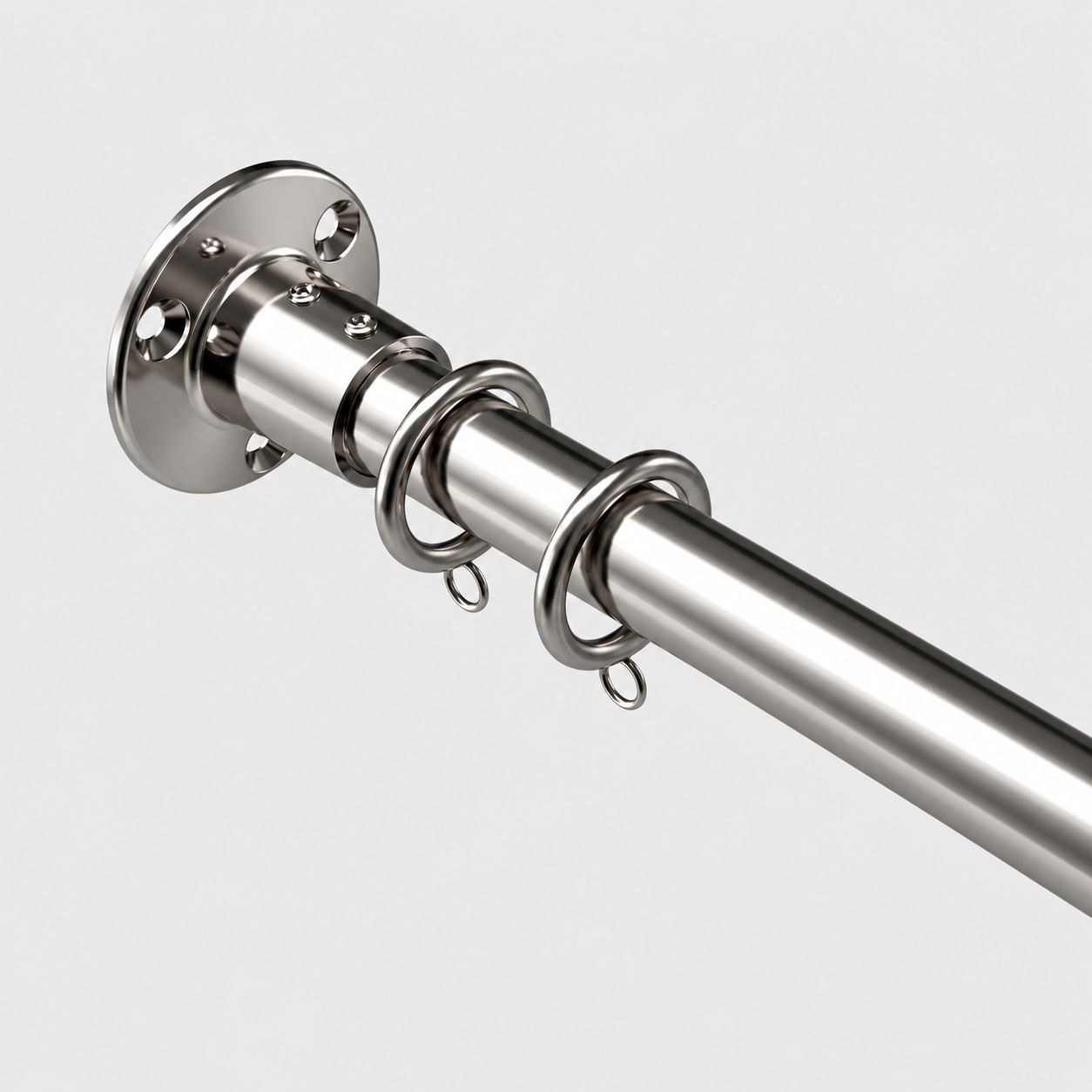
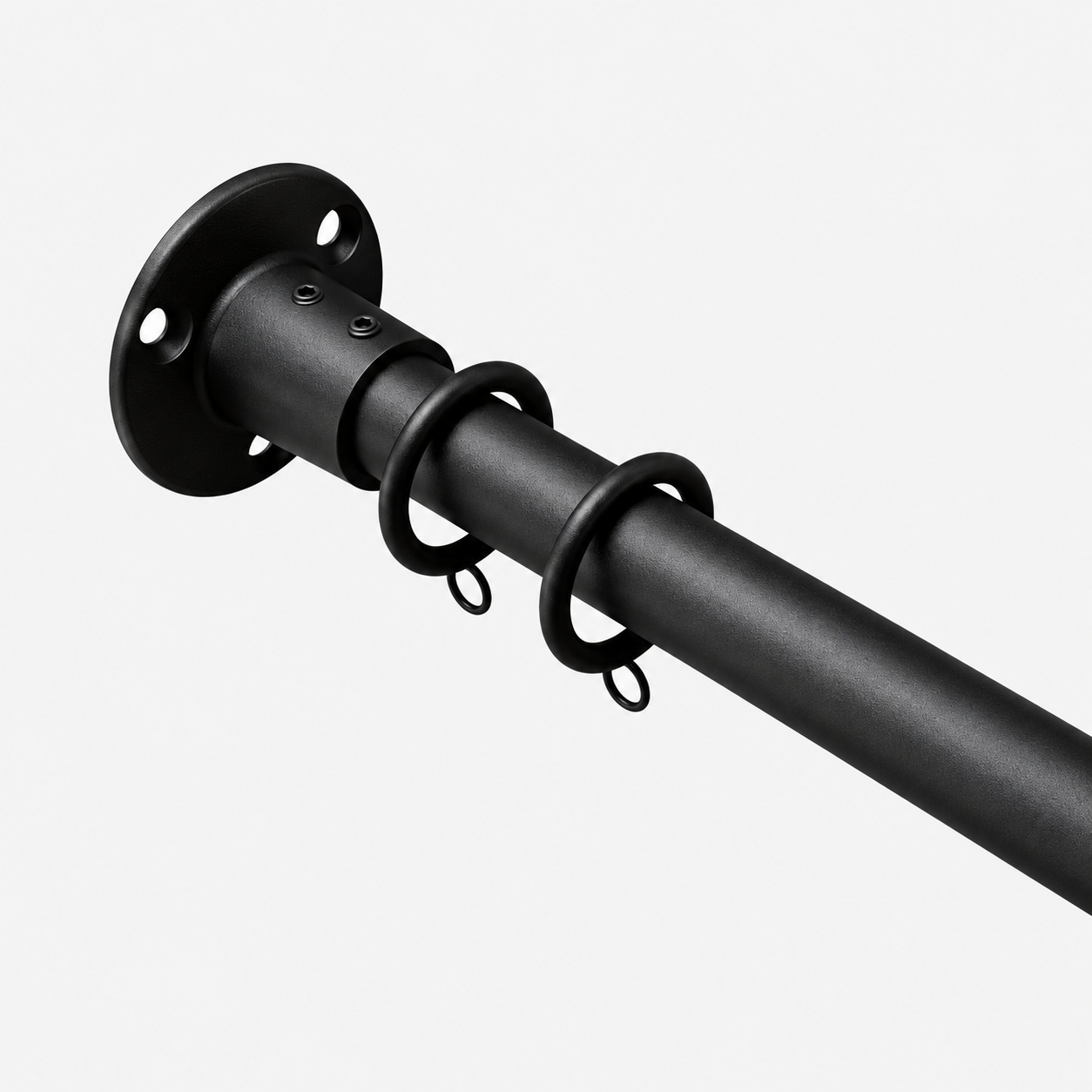
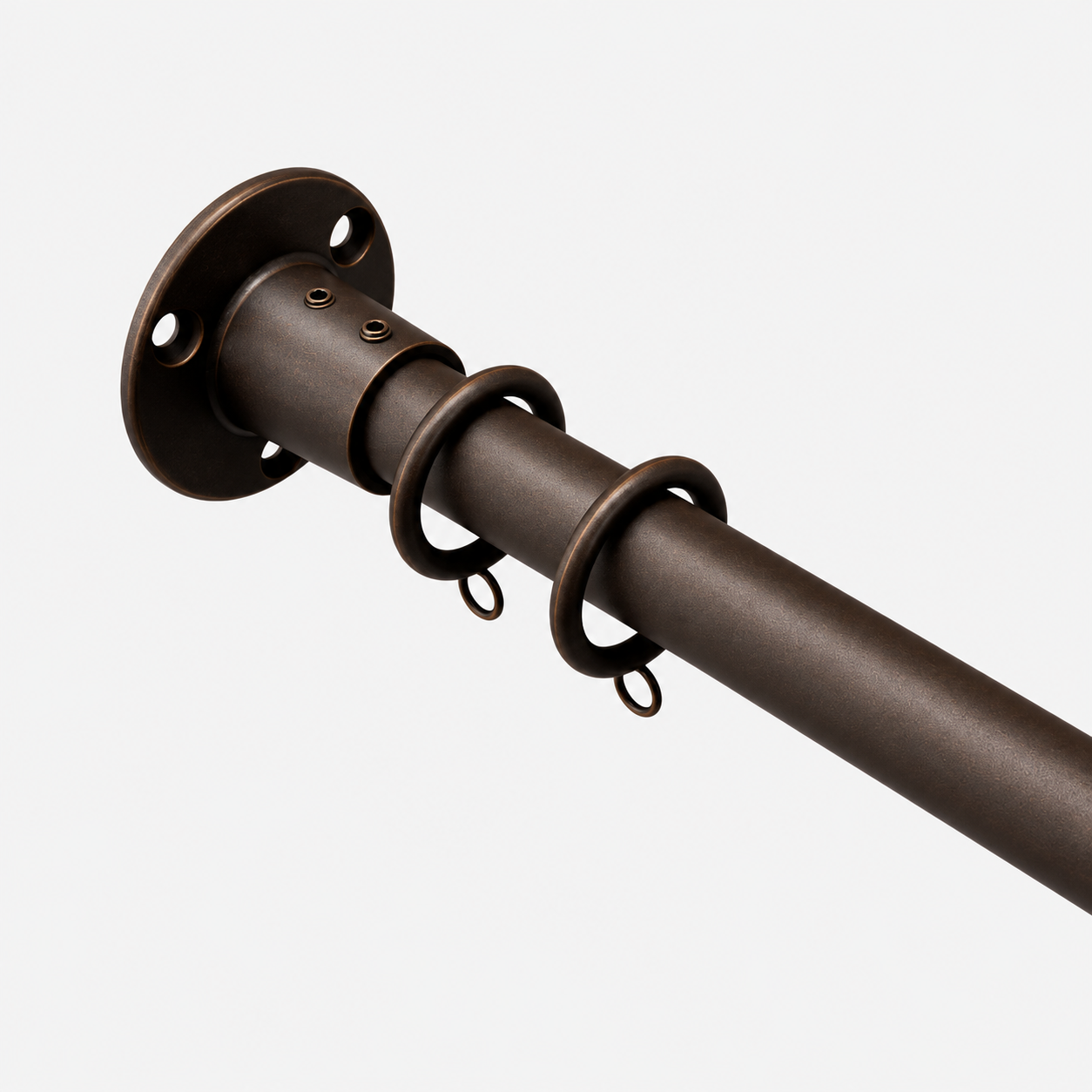
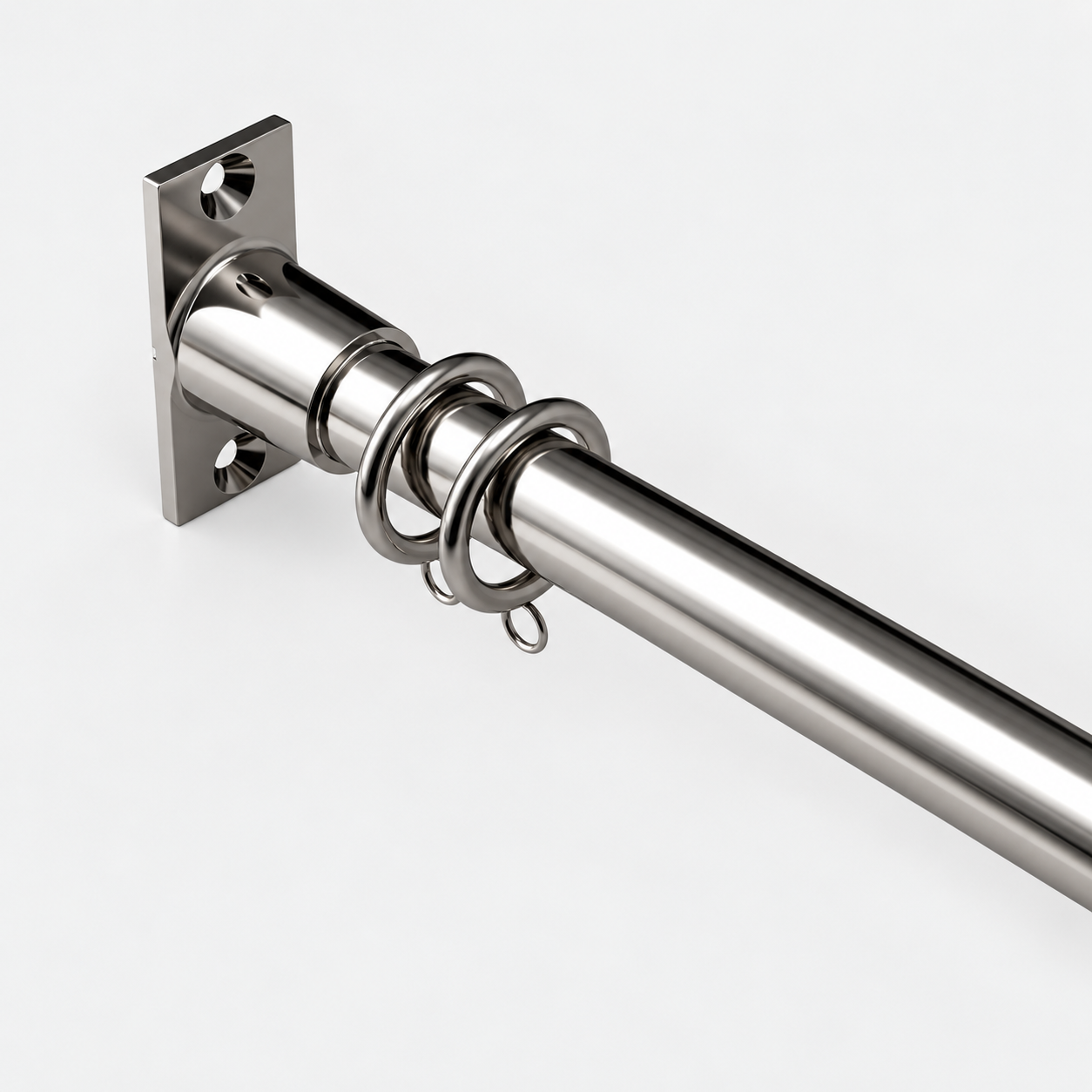
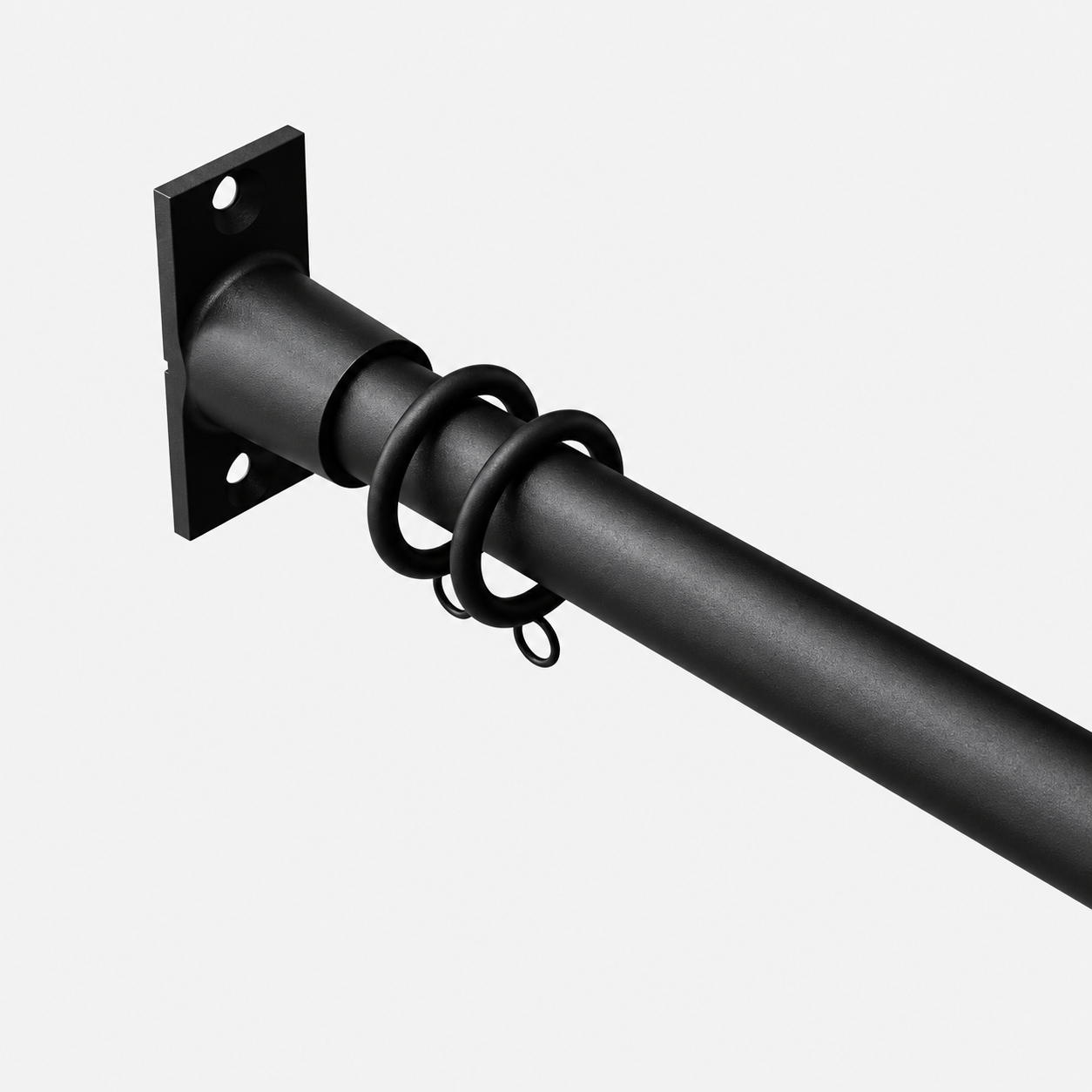
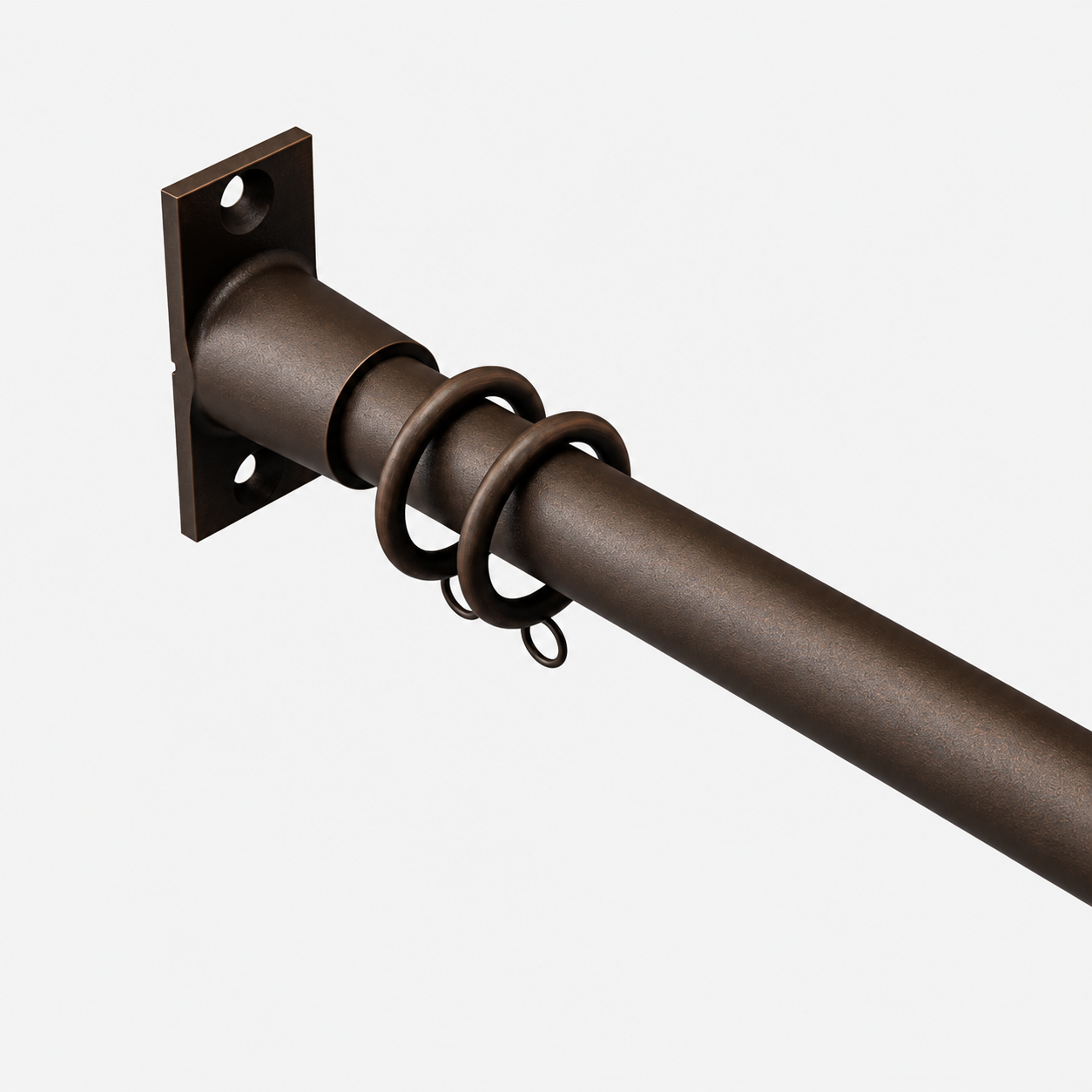
Finish and mounting photos follow the selected options.
Inside Mount Straight Rod with Nautilus Brackets
Choose inside-mount hardware for the actual condition. Add a matched center support whenever the unsupported span would exceed 96 inches.
Material: 316 stainless steel · 1″ diameter tube
Finishes: polished stainless, black, oil-rubbed bronze
Panel choices: pleated with rings, or grommet, tab-top, or rod-pocket without rings
A complete system is specified from the selected mount, support, ends, panel attachment and wand.
Plan your inside-mount rod
Select the details below so we can prepare the correct system.
1. Size
Enter the inside opening width. The finished rod is ½″ shorter. Sections and supports are planned so no span between brackets exceeds 96″.
2. Mount and ends
Both ends mount between the finished walls with the selected round or square inside bases.
Measure between finished walls at several points and use the smallest reliable dimension. The fitting allowance deducts ½″ from that opening.
3. Drapery and operation
With no rings, choose grommet, tab-top, or rod-pocket panels. Where a supported joint must be crossed, matched open bypass rings and bracket hardware are required; ordinary closed rings stop at the support.
The 48″ stainless wand is the premium choice. The attachment for either wand is confirmed with the panel design.
4. Configuration details
Tell us if furniture, a nearby wall, or limited stackback space affects the opening direction. For a rod inside an opening, measure between finished surfaces at several points.
Working price breakdown
Rings are optional and priced separately. Added support and freight rates are confirmed with the final quote. Ordering stays unavailable while those prices are verified.
Frequently asked questions
How do I measure for this rod?
Measure between the finished inside walls at several points and enter the smallest reliable opening width. We deduct ½″ for fitting clearance to calculate the finished rod length. Confirm the socket fit and mounting surfaces before fabrication.
When is a center support needed?
No bracket-to-bracket span may exceed 96″. A longer rod needs enough supports for its total length, with every tube joint supported. The substrate and drapery load may call for additional support.
How is this Nautilus inside-mount rod installed?
Select matching round or square inside bases at both ends. Fix them into suitable wall structure, confirm the smallest finished opening and fitting clearance, then secure the one-inch tube before hanging the drapery.
Open the complete installation and measurement guide with drawings.
Which drapery styles can I use?
Pleated drapery can hang from rings. Grommet, tab-top and rod-pocket panels travel directly on the rod without rings. Check the heading, mounting clearance, ring order and panel stack before fabrication.
Which wand can I choose?
Choose no wand, a clear acrylic wand, or the premium stainless steel wand. The stainless wand is offered in 48″ only. Confirm the correct attachment and quantity for the selected panel arrangement.
What fasteners are supplied?
Plumridge supplies rust-proof screws in the selected finish. The installer selects suitable anchors for the actual structure and load. A stud or sound blocking is preferred where available; drywall, masonry, soft metal and structural steel each require their appropriate fixing method.
Internal inside-mount checkout test
Admin test only. Selected finishes, optional rings, wands and quantity are priced on the server. Finished rods up to 96″ are enabled; longer systems require a custom design quote.