
Shades / Roller Shades
Choose your roller shade
Start with a style. Then choose your fabric, controls and measurements.
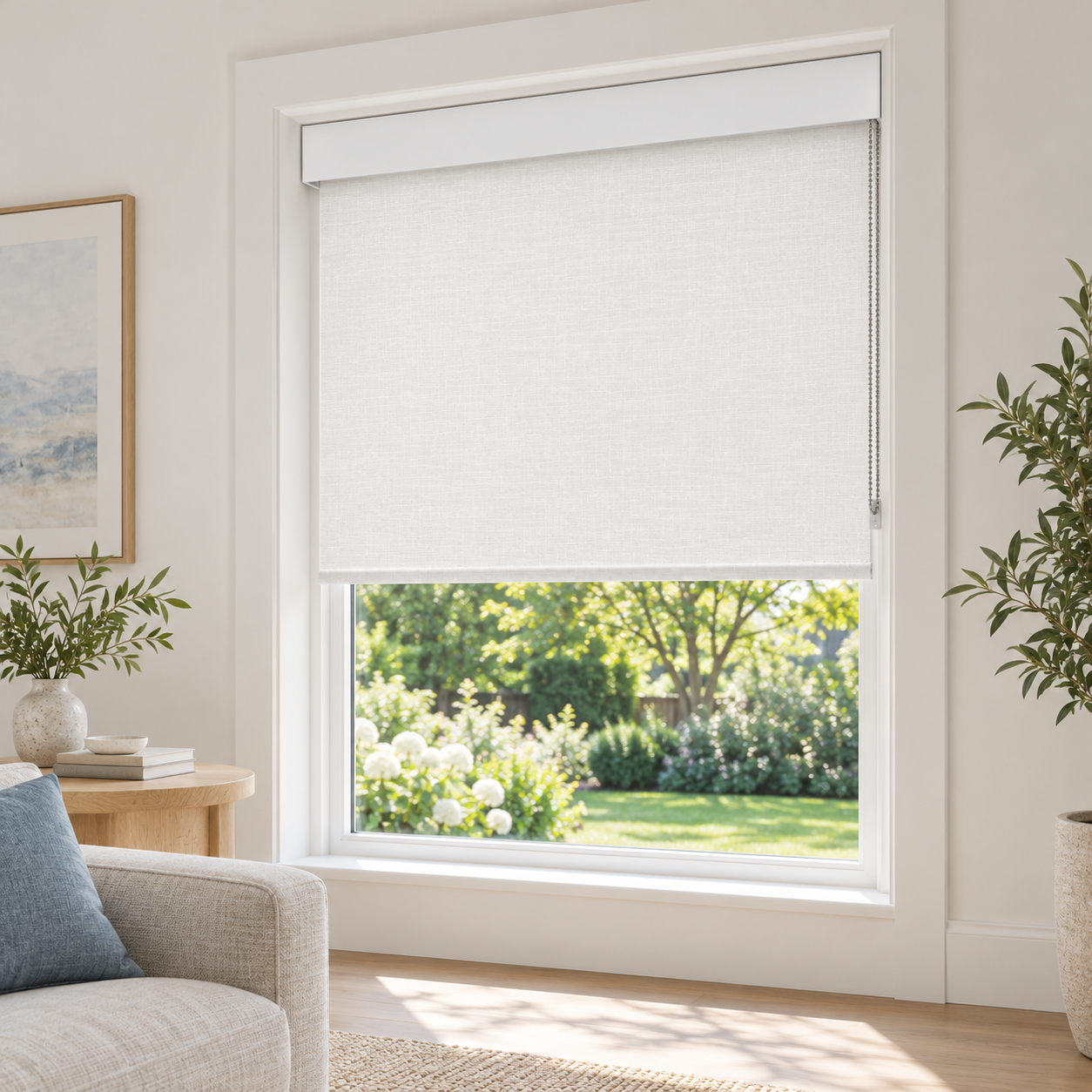
A clean finish, made to fit.
Start with the way you want your room to feel. Choose a solar screen for filtered daylight and an outward view, or a blackout fabric when privacy and light control come first.
Finish your shade with a visible fabric roll, a smooth reverse roll or our favorite white L fascia. We help bring the fabric, mounting and measurements together.
Manual and motorized options. Configure your windows above; prices will appear once our price lists are loaded.
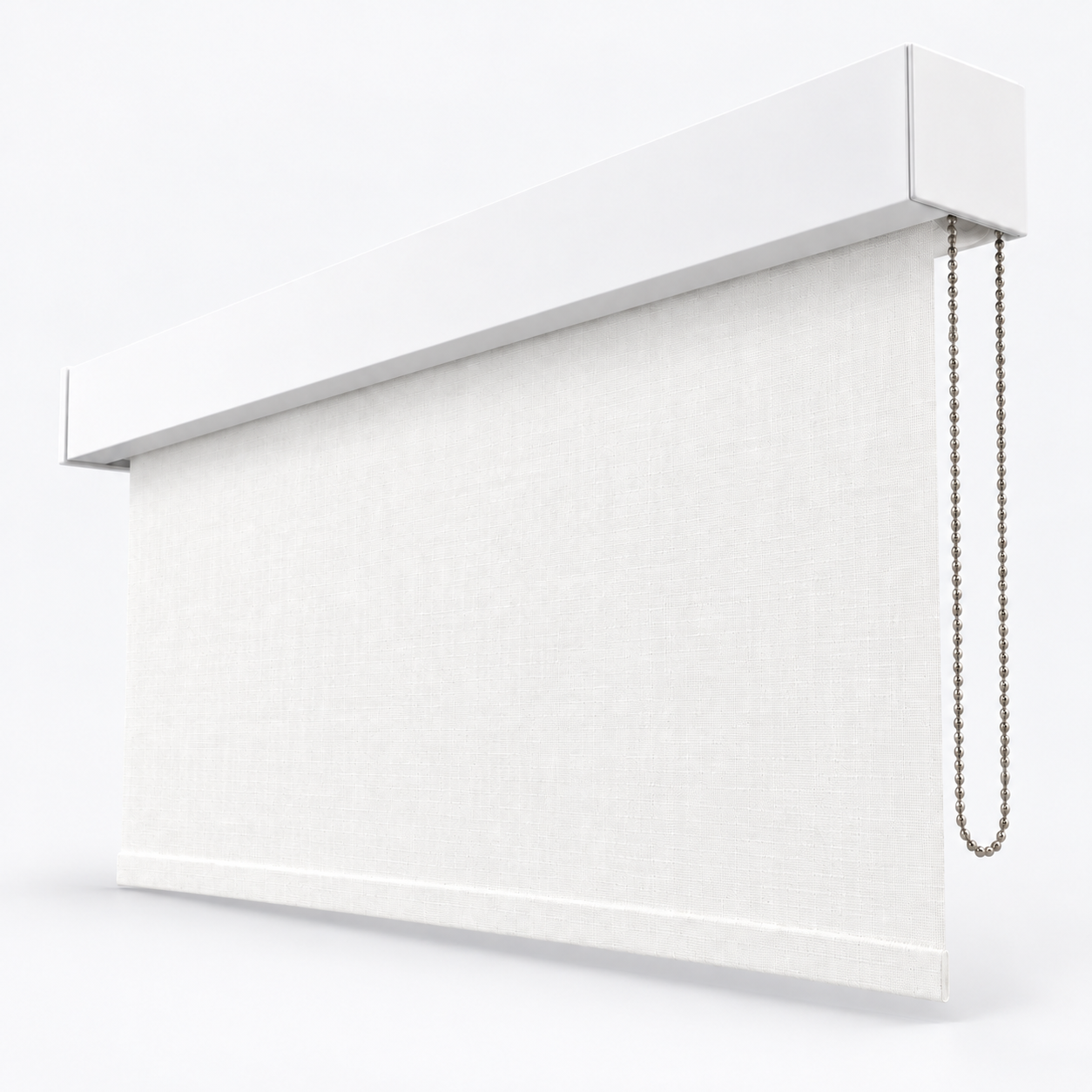
A clean profile. A beautifully finished underside.
The L-shaped fascia has a flat front and a horizontal return beneath the roller. That return screens the underside of the roll when you look upward.
Our L fascia is used with regular roll only. The fabric descends behind the return, nearest the window. The fascia version uses square brackets and snap-on side covers; exposed-roll shades use the smaller rounded-front covers.
The manual versions shown use a clutch and bead chain. Motorized L fascia options are available in the configurator above. For a manual shade, tell us your preferred control side.
Inside or outside the casing?
Inside Mount
A fitted shade sits within the window recess. We check depth, obstructions and the chosen hardware so the roller brackets can sit behind the wall plane. The L fascia can be nearly flush, depending on recess depth.
Send the actual opening measurements and a side photo. We confirm the manufacturing deductions; do not take a deduction yourself.
Outside Mount
The shade is fixed above or onto the window casing and overlaps the opening. We plan the width, height and clearance together so the fabric covers the area you need and clears projecting trim or handles.
Compact end covers keep regular- and reverse-roll hardware discreet. Outside mounting can improve overlap, but does not by itself eliminate every light gap.
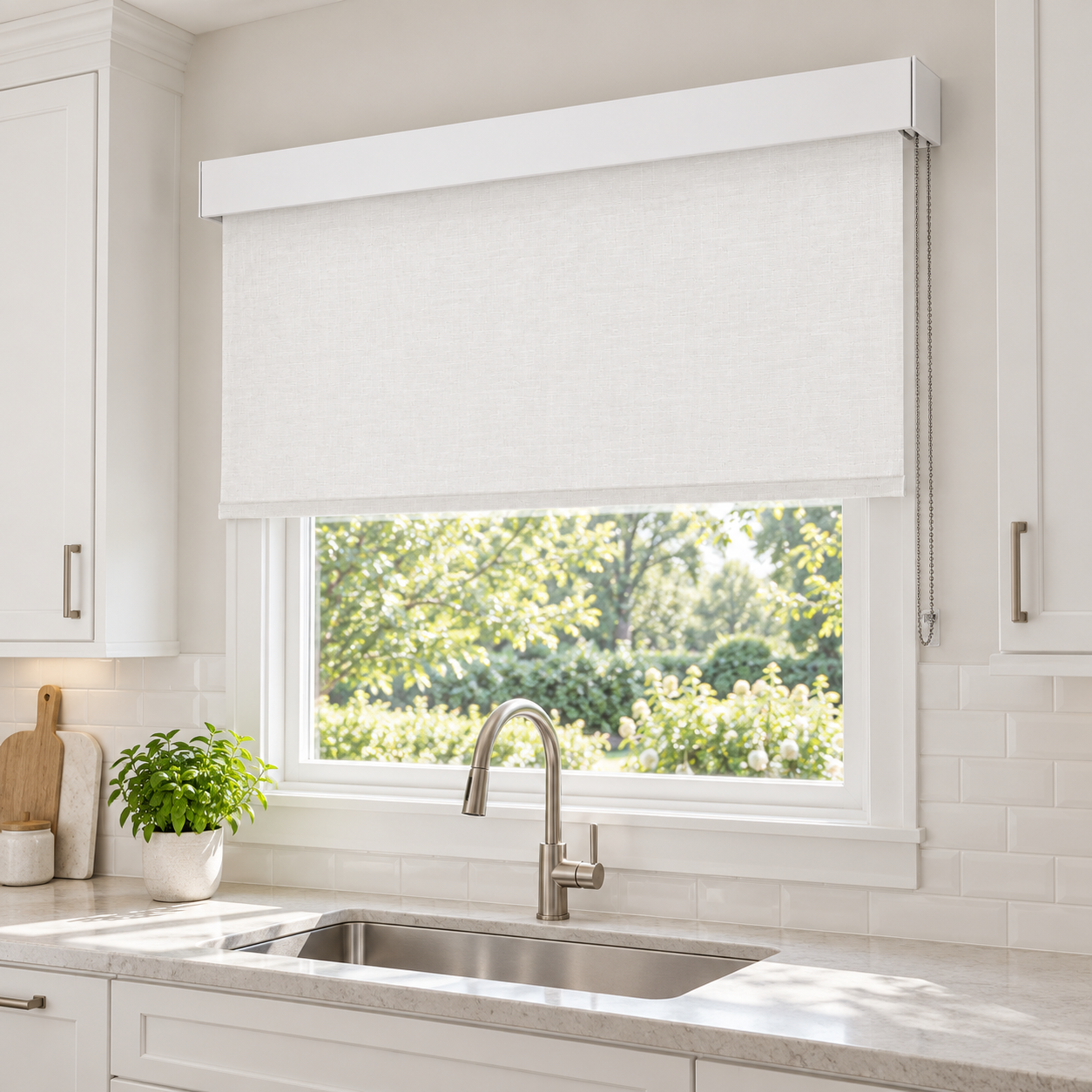
L Fascia · Outside Mount
A crisp white valance above a kitchen window and sink.
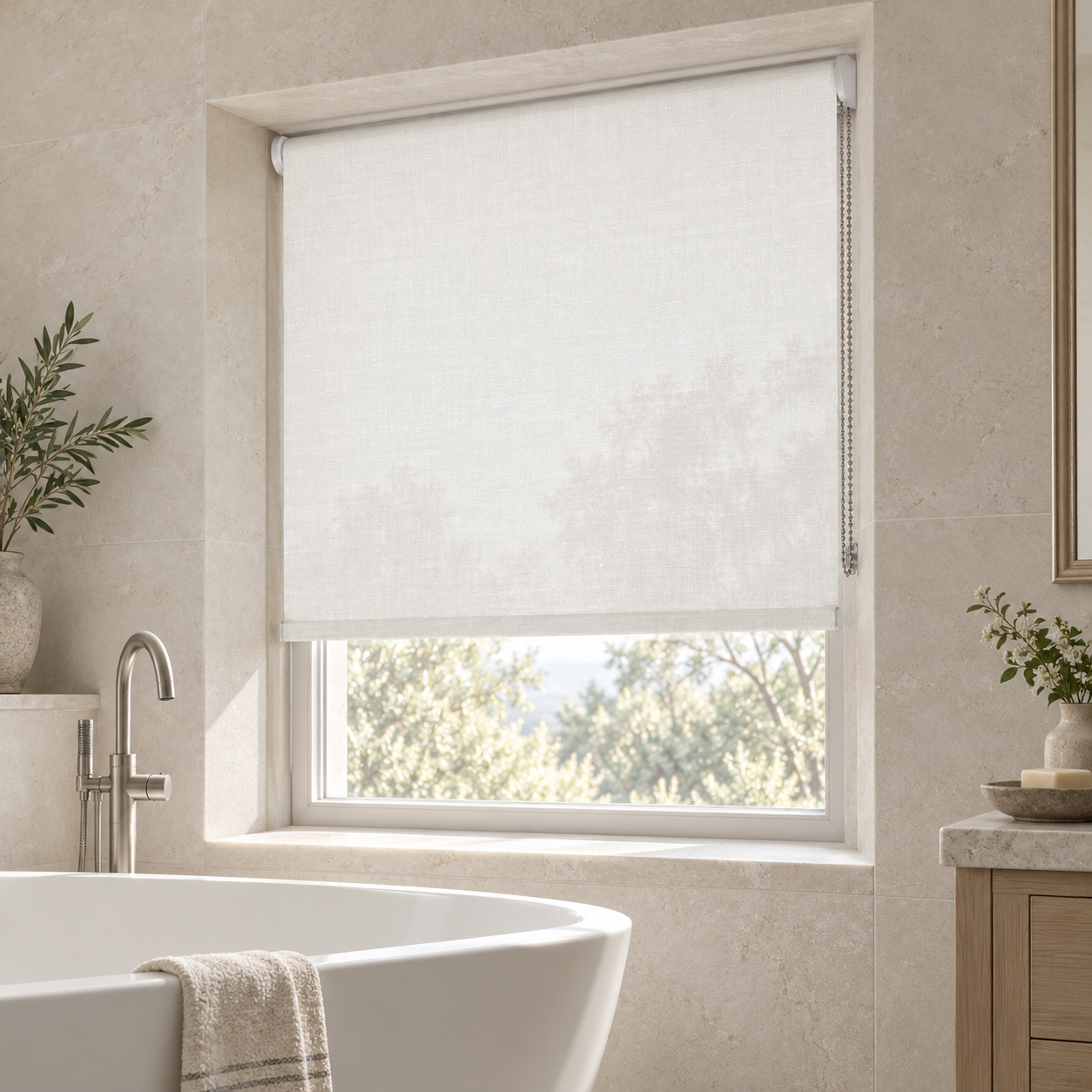
Reverse Roll · Inside Mount
A smooth front waterfall contained within a bathroom window recess.
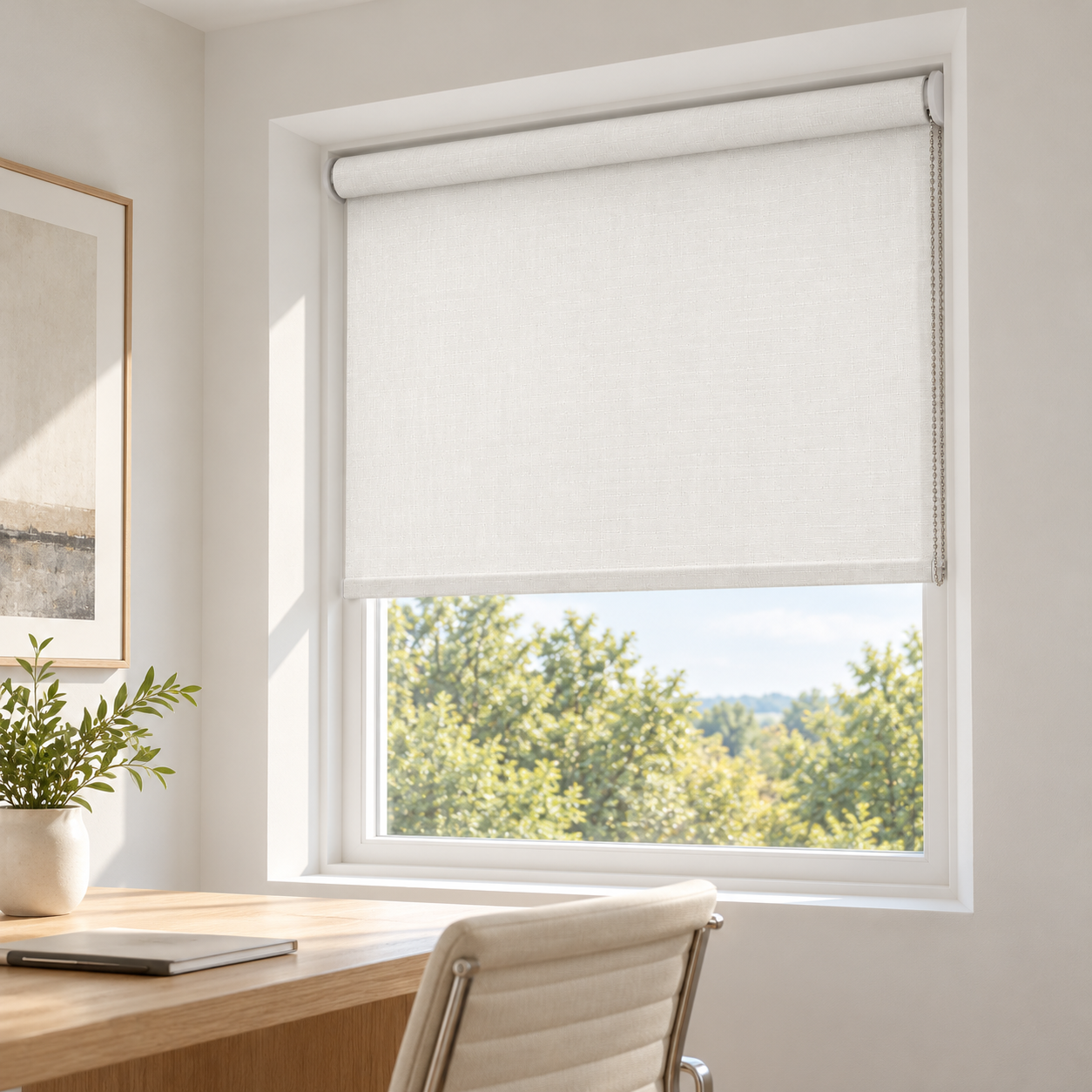
Regular Roll · Inside Mount
A visible fabric roll, neatly fitted within an office window casing.
L Fascia · Inside Mount
A near-flush fascia within a recessed living-room window.
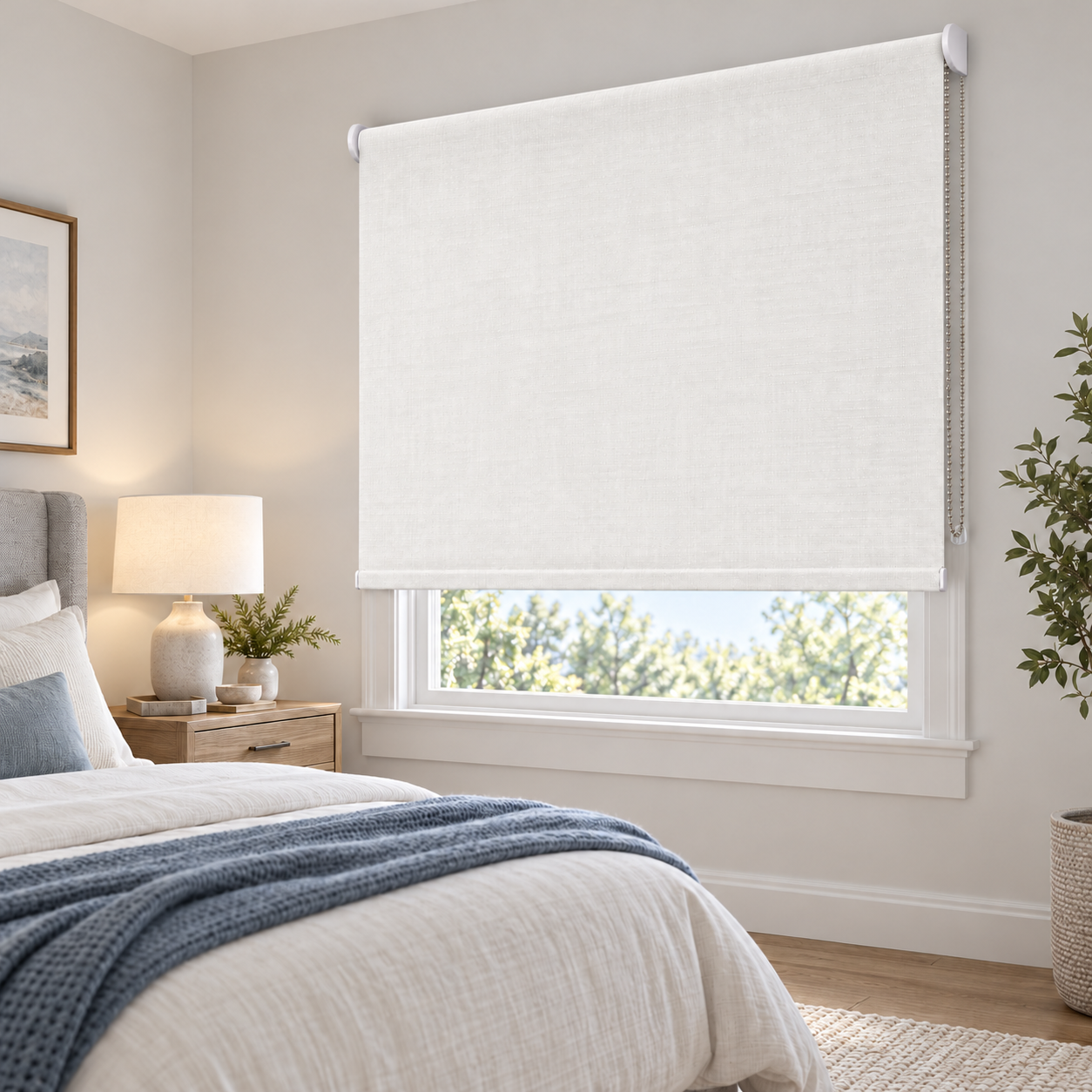
Reverse Roll · Outside Mount
Clean fabric at the front, with compact covered ends.
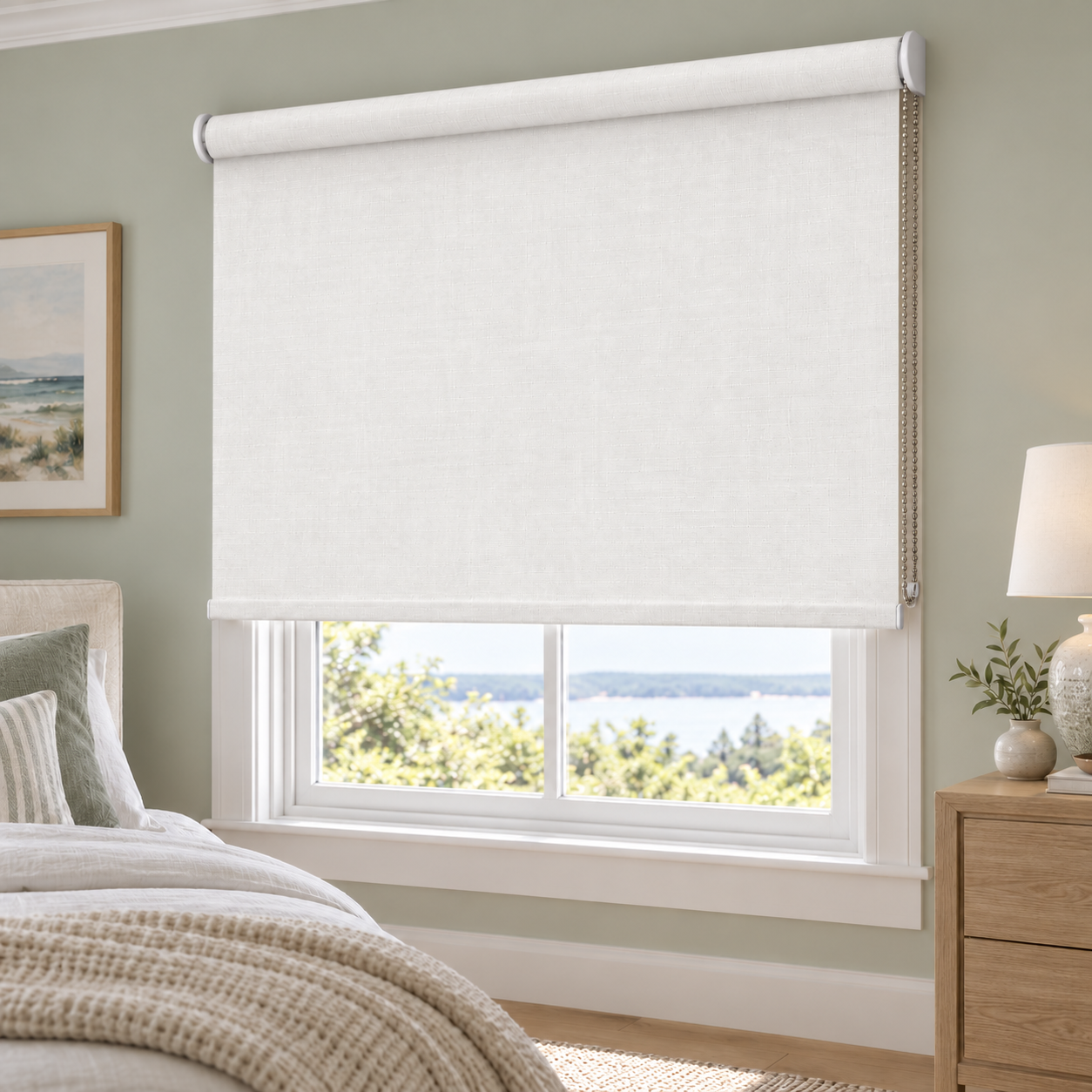
Regular Roll · Outside Mount
A fabric-wrapped roll above the casing in a calm bedroom.
Room and product images are illustrative visualizations. Final fabric, hardware, clearance and fit are confirmed for your window.
How much of the view would you like to keep?
Openness describes the open area in a solar fabric’s weave. With comparable fabric color and lighting, a lower number gives a more screened view; a higher number reveals more of the scene.
1%
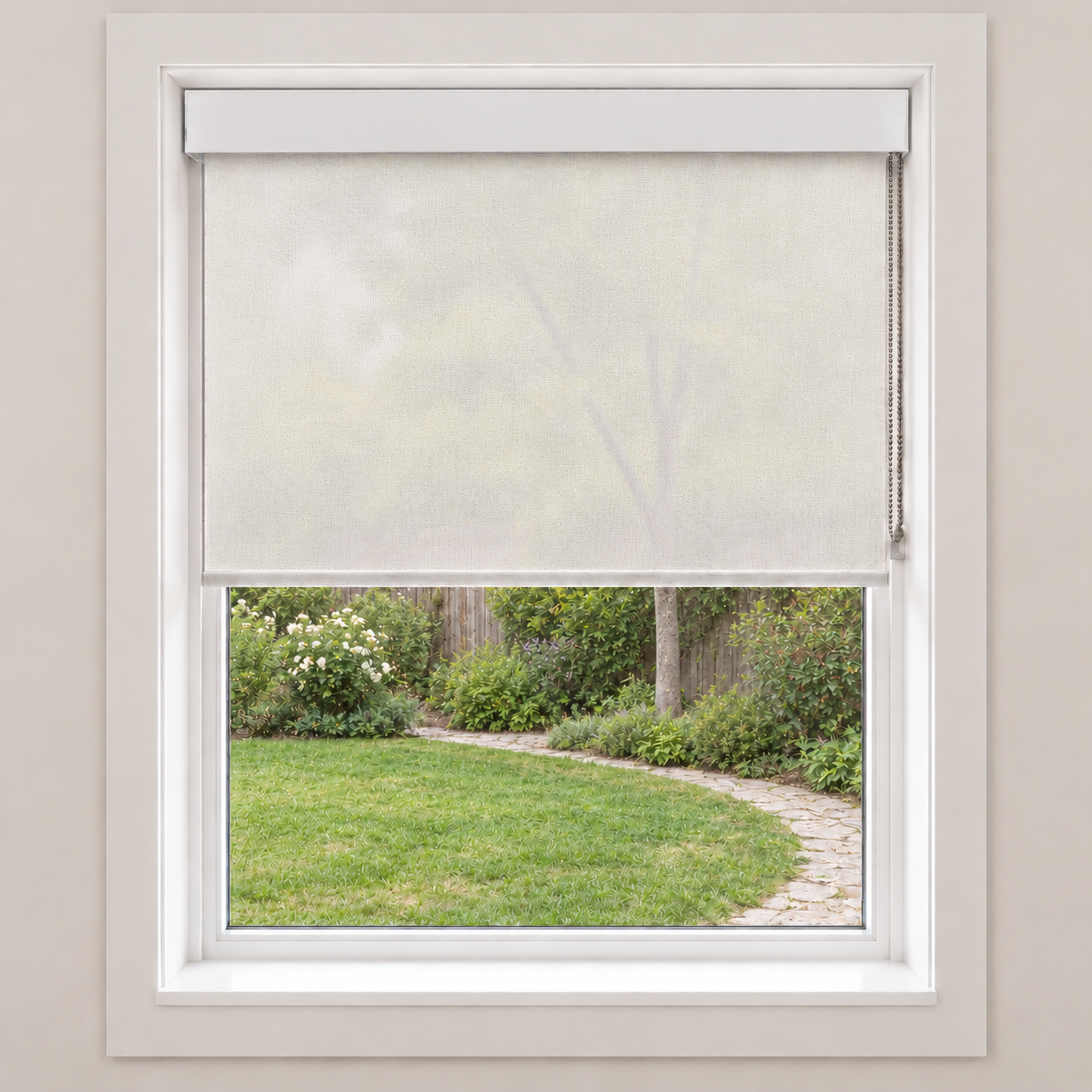
The tightest solar screen in this comparison.
3%
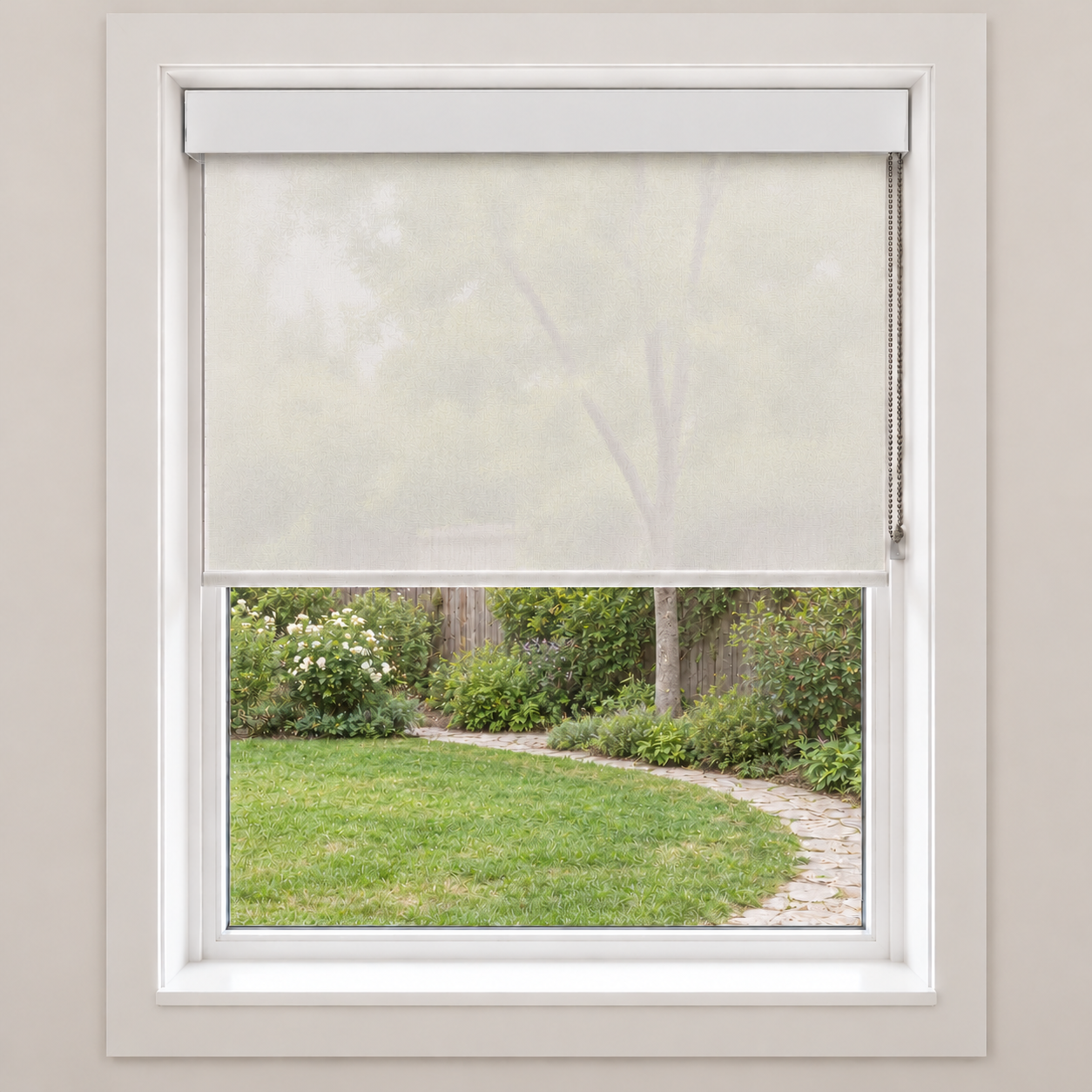
A little more of the garden becomes visible.
5%
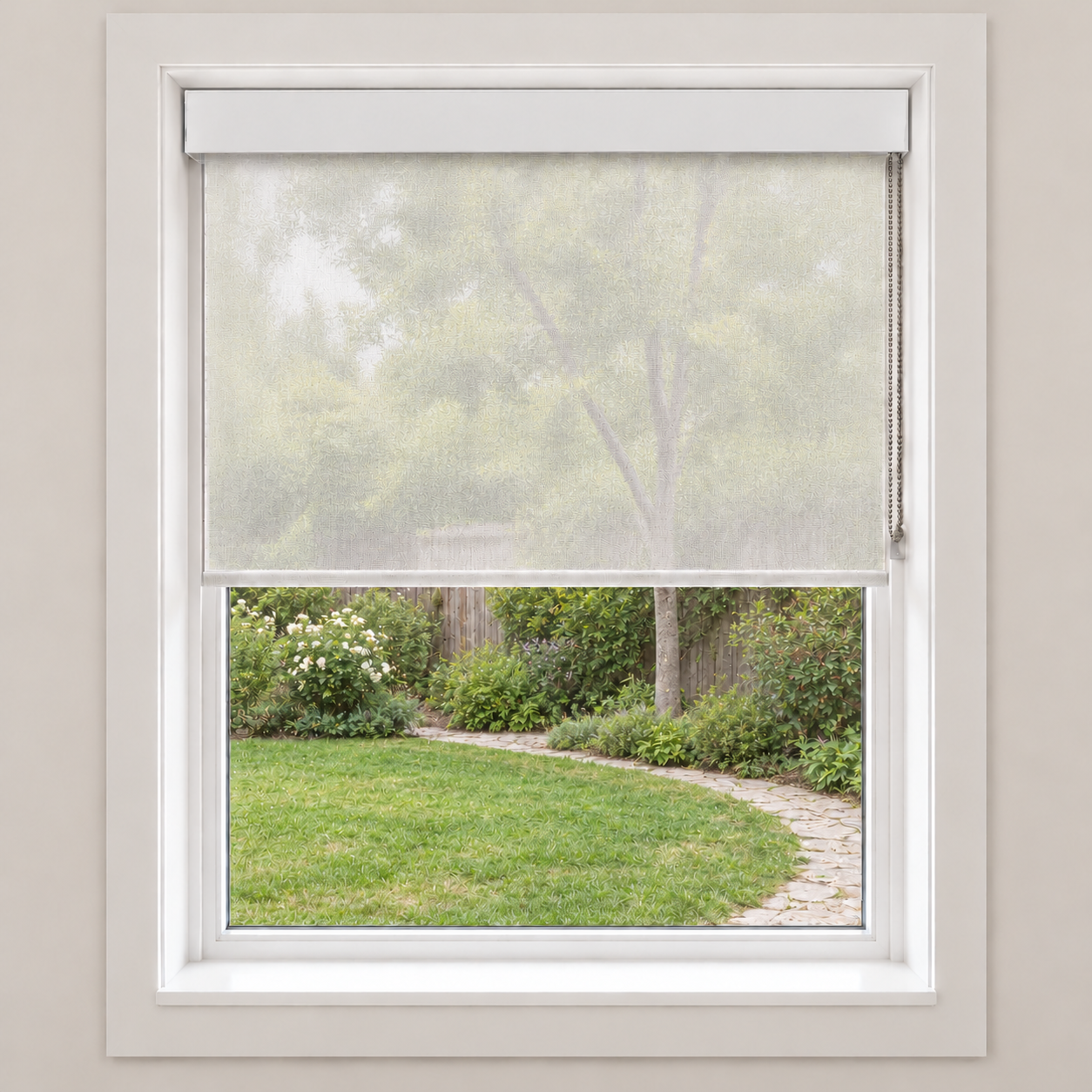
A more open screen with greater view-through.
10%
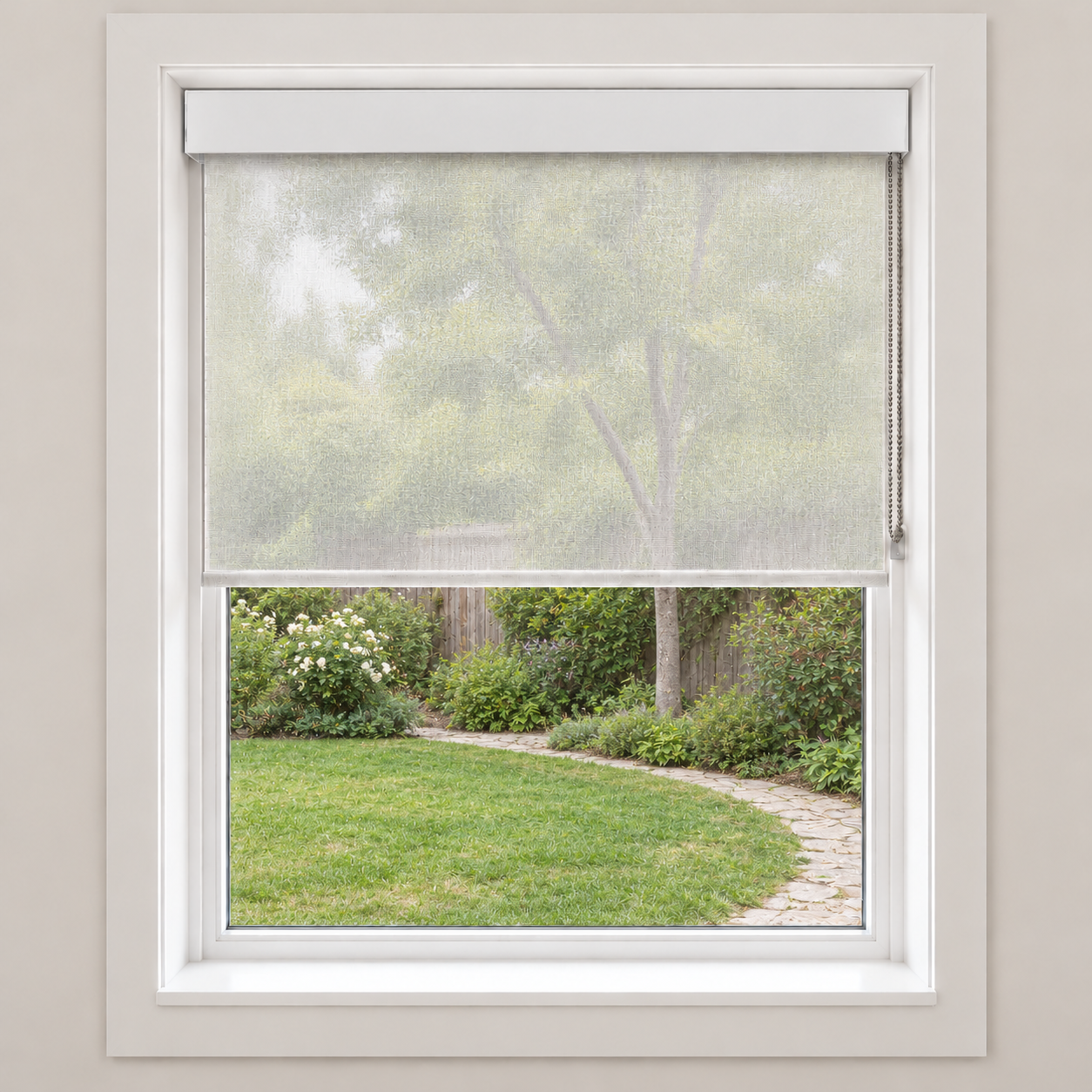
The clearest solar view in this comparison.
Blackout
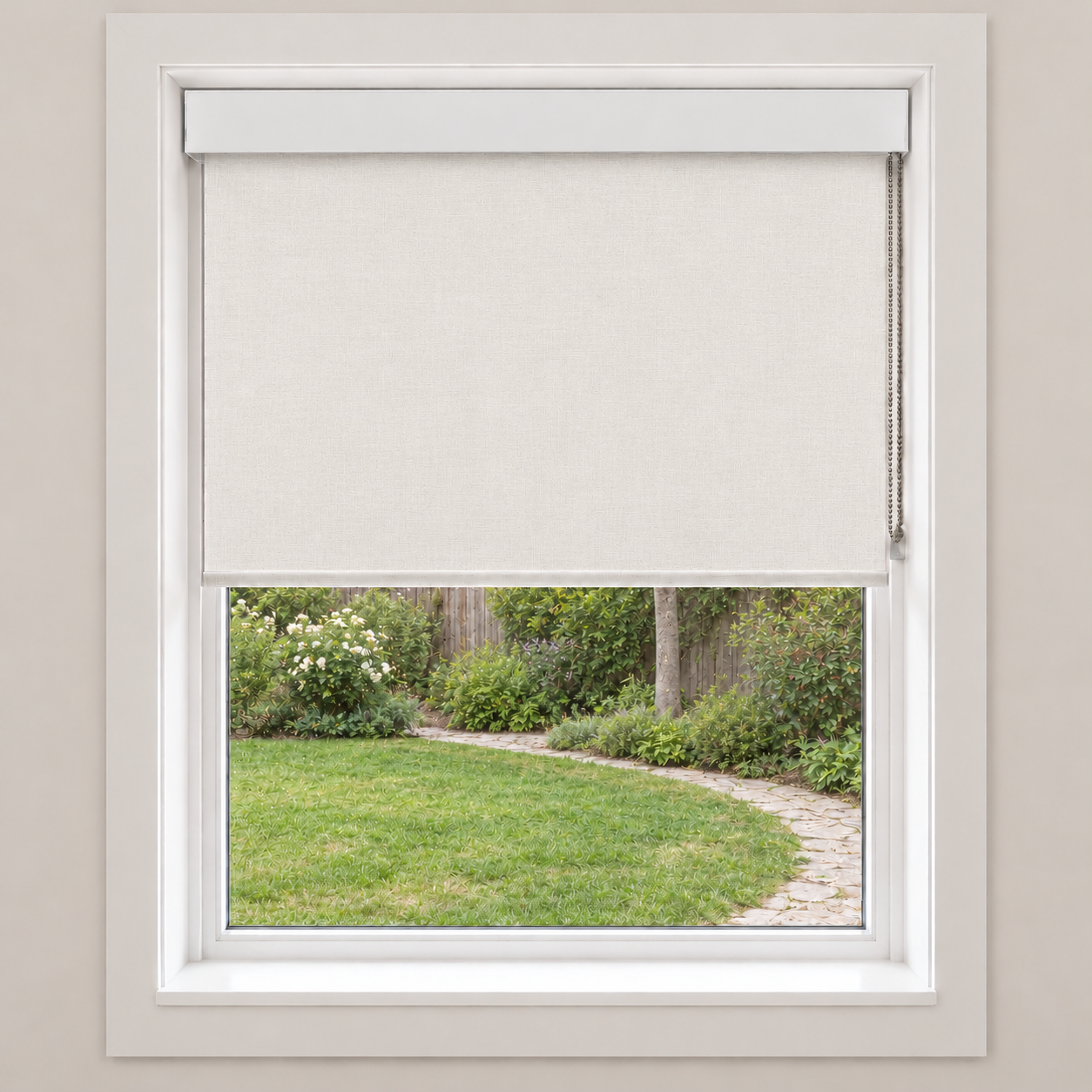
Opaque fabric blocks the covered portion of the view.
Illustrative view-through comparison, not a calibrated simulation of a named fabric. The garden, casing and shade position are held consistent in concept. Fabric color, weave and lighting change the real result. Tap any image to inspect it more closely; confirm your choice with physical samples.
Choose the fabric for the room
Solar Screens
For glare reduction, filtered daylight and an outward view. Our core options are 1%, 3%, 5% and 10%. The right choice depends on your exposure, fabric color and priorities.
Solar screen does not provide dependable nighttime privacy. Consider an opaque layer where privacy is needed after dark.
Light-Filtering Fabrics
For softened daylight with decorative color or texture. A fabric marked <1% can offer greater screening while still passing light. Check the exact collection and color rather than treating every light-filtering fabric as the same.
Privacy depends on lighting and the selected fabric; light-filtering is different from blackout.
Blackout Fabrics
For an opaque fabric face, stronger room darkening and privacy. Blackout fabrics can be white, ivory or other colors; the term describes performance, not color.
Light can still enter around the edges of the finished shade. Tell us if the room needs a high level of darkness.
Color changes the way a screen performs
Lighter colors
White and light neutral yarns reflect more light and solar energy. The fabric can appear brighter in the window, with a softer outward view. A light fabric is not automatically the clearest way to see outside.
Darker colors
Darker screens generally give a clearer outward view and strong glare control. They absorb more solar energy. The full heat-control result also depends on the fabric, glazing and installation.
Weave matters too. Regular basketweaves often give a more even view than heavily decorative patterns. Compare samples at the window in daytime and with your interior lights on in the evening.
Explore the Yuma fabric families
| Family / collection | Light-control options | Where to begin |
|---|---|---|
| Omega | 1%, 3%, 5%; separate Omega Blackout 0% | A practical starting point for coordinated solar screening and opaque fabric. |
| Omega Pro | 3%, 5%, 10% | Additional screen options; confirm suitability, color and specifications for the application. |
| Atlas / Helios; Apollo / Metis / Lemnos | 1%; 3% | Denser screening and other solar weave choices. |
| Bromus / Cyprus; Dorus / Persis / Shantung | 5%; 4%, 8%, 10% | Textural and specialty solar alternatives reviewed through consultation. |
| Geneva, London, Madrid, Manchester, Morelle, Shimmering, Silk Bamboo, Soft Linen | Light-filtering <1% and blackout 0%, depending on collection | Explore decorative textures with the appropriate light-control construction. |
| Midnight, Allure, Galaxy, Monticello, Nouveau, Static | Blackout 0% | Opaque collections for privacy and room darkening. |
| Marseille / Cannes | Light-filtering <1% | Decorative fabrics where softened daylight is the priority. |
Collection guide based on your Yuma material and manufacturer references. Colors, constructions, widths and technical attributes vary by style. We confirm the current sample card and exact fabric specification when preparing your quote.
See it at your window.
Screen colors cannot show the full effect of a fabric. Ask us about fabric samples or sample cards, then compare color, texture and view-through in your own room before final selection.
A few useful answers
Will a 1% screen admit only 1% of the daylight?
No. Openness measures the open area of the weave. Visible light transmission (Tv) also includes light passing through the yarns. It is a separate specification, and changes with color and construction.
Will a solar shade give privacy at night?
Do not rely on a solar screen for nighttime privacy. When the interior is brighter than outdoors, people outside may see in. Choose an opaque blackout fabric or an additional privacy layer where needed.
Which fabric should I choose for glare, a view or heat control?
Tell us the window’s orientation, time of troublesome sun, whether you work at a screen, and how important the view is. We review color, weave and openness together. Exact solar reflectance, absorption and transmission values belong to the selected fabric and color; they are not interchangeable.
Does blackout fabric make a completely dark room?
It blocks light through the fabric itself. Gaps at the sides, head and sill can admit light. Mounting, overlap and surrounding details affect the result. Share your darkness requirements before we specify the system.
Do all fabrics carry the same certifications?
No. The Yuma guides identify attributes by collection. For a project requiring GREENGUARD Gold, OEKO-TEX, RoHS, fungal resistance or a particular fire-test classification, we confirm the current documentation for the exact selected fabric. A fabric test does not establish compliance of every finished shade or installation.
What technical information can you provide?
Ask for the collection and color code, openness, composition, roll width, thickness and weight; visible light transmission (Tv), solar transmission/reflectance/absorption (Ts/Rs/As), UV performance and glazing-specific SHGC where available; plus care instructions, test documentation and fabric warranty. Manufacturer fabric warranties and hardware or installation terms are separate.
How should I clean the fabric?
Follow the instructions for the exact selected collection. For Yuma Omega screening, the manufacturer advises gentle dust removal, avoiding solvents and abrasive materials, and leaving the shade down until fully dry after approved cleaning. Other collections can require different treatment.
How do I configure several windows?
Choose a style at the top of this page, select your fabric and controls, and enter your measurements. Give each window a label and select Save window. Repeat for other windows; identical shades can share a quantity. Copy or download your saved configurations for your records. Pricing and checkout will be available once the price lists are loaded.
Technical reference: openness and light transmission
For illustration, Phifer publishes these approximate figures for the face of SheerWeave P12 Oyster. They are manufacturer-specific examples, not Yuma specifications and not optical calibration of the garden images.
| Phifer style | Openness | Visible light transmission (Tv), face | Approx. UV blockage |
|---|---|---|---|
| 2701 / P12 Oyster | 1% | 19% | 99% |
| 2703 / P12 Oyster | 3% | 21% | 97% |
| 2705 / P12 Oyster | 5% | 24% | 95% |
| 2710 / P12 Oyster | 10% | 30% | 90% |
Phifer specifications and optical tables · Phifer guide to color and openness · Yuma fabric guide.
Ready to configure your windows?
Choose your style above, enter the measurements and save each window configuration. Your choices stay in this browser while you plan your order.
Call 310-230-0484 · [email protected]